Between 1830 and 1850, the Sollitt brothers played a pivotal role in shaping the early construction landscape of Chicago, combining their skills and partnerships to leave a lasting legacy. This period saw significant growth for both the family and the burgeoning city of Chicago.
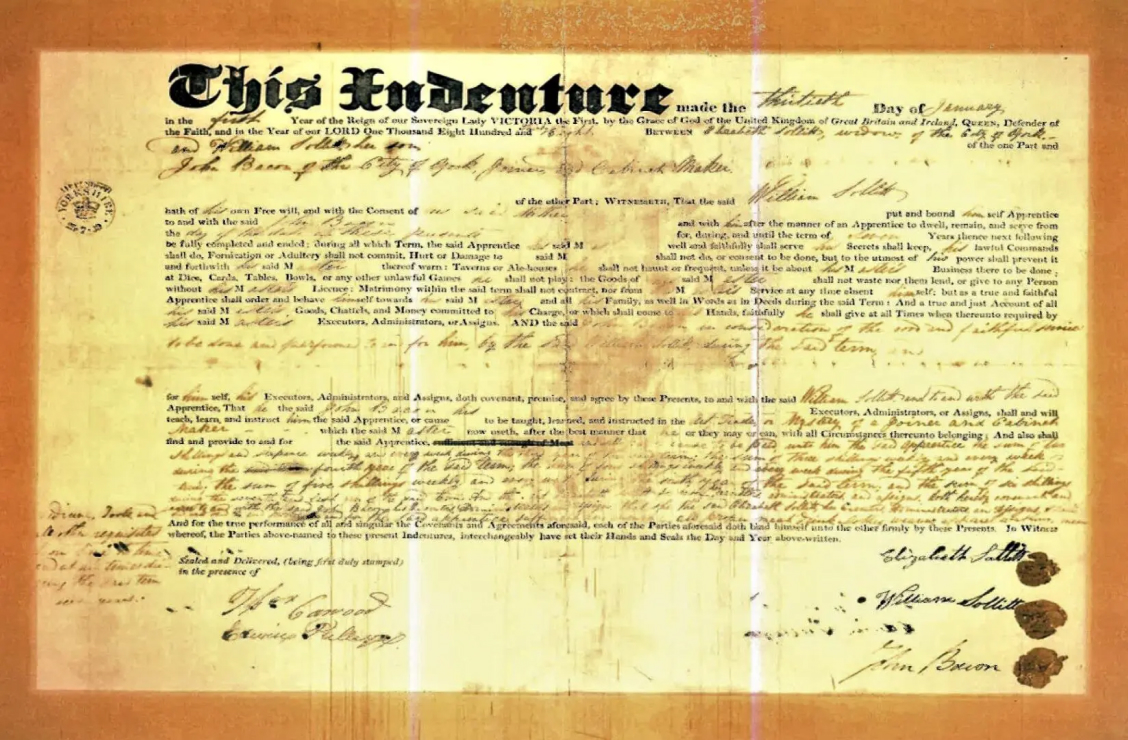


Thomas Sollitt was the first of the brothers to arrive in Chicago in 1836, drawn by the city’s rapid expansion. At the time, Chicago was becoming a hub of commerce and development, with infrastructure projects providing ample opportunities for skilled builders like Thomas.
Two years later, in 1838, William Sollitt joined Thomas in Chicago. The brothers began working together as builders, honing their craft under the employment of Azel Peck, a notable figure in Chicago’s early construction industry. They worked with Peck until 1840, gaining valuable experience and building a network of connections.
In 1840, the Sollitt brothers entered into a partnership with Azel Peck and another builder, forming Updike, Peck & Sollitt. This collaboration allowed the brothers to take on larger and more complex projects, contributing to Chicago’s transformation from a frontier town to a growing city.
After Azel Peck left the partnership in 1846, the business became Updike & Sollitt. During this period, the Sollitt brothers continued to build and expand their influence in Chicago’s construction industry. Their projects reflected the city’s changing needs as it grew in size and complexity.
The lure of gold fever took hold of William Sollitt in 1849. He left Chicago to seek his fortune in California, where he spent seven years before eventually returning. This temporary departure marked a period of transition for the Sollitt family but did not diminish their impact on Chicago’s development.
The period between 1830 and 1850 was foundational for the Sollitt brothers. Their work during these two decades laid the groundwork for their eventual establishment as leaders in Chicago’s construction industry. Their partnerships and projects during this time played a significant role in shaping the city’s early architectural identity.
"From humble beginnings to shaping a city—The Sollitt brothers laid the foundation for Chicago's growth with every brick they placed."