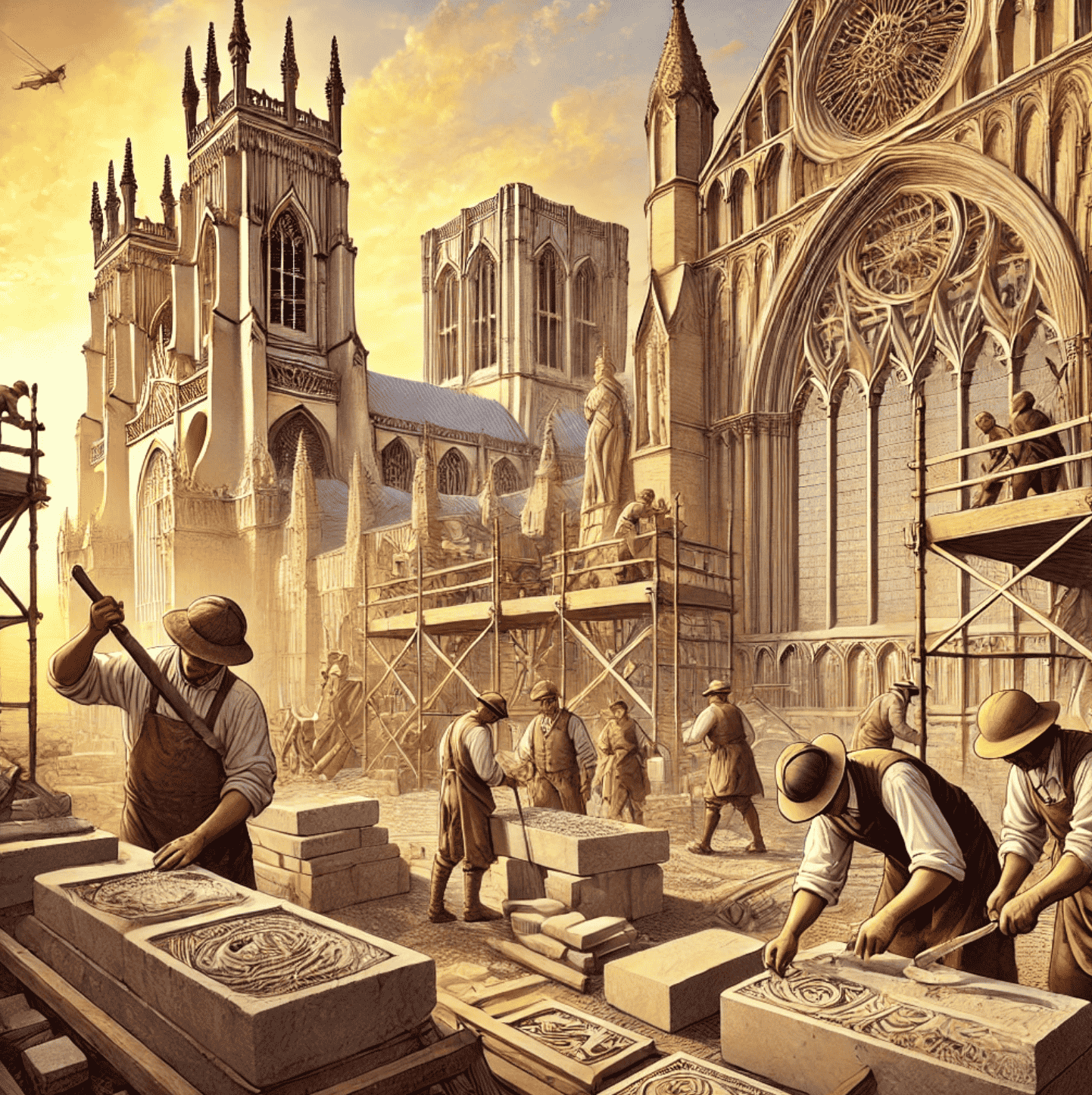
The Sollitt family’s story between 1689 and 1830 is a testament to their exceptional craftsmanship and resilience in the face of political and economic upheaval. During this period, they honed their skills as cathedral builders and fortification experts, finding steady work at the historic York Minster Cathedral in England. Their story weaves together themes of craftsmanship, faith, and survival, as they navigated turbulent times following the Revocation of the Edict of Nantes.

The Sollitt family’s migration to England was driven by necessity. In 1685, Louis XIV of France revoked the Edict of Nantes, a decree that had granted religious freedom to Protestants. This act stripped Protestant craftsmen, including the Sollitts, of their right to practice trades and forced them to leave their homeland. Seeking new opportunities, the family relocated to England, where their expertise in stone masonry and construction quickly earned them a reputation as skilled builders.
Arriving in England, the Sollitt family found work on York Minster Cathedral, one of the most iconic Gothic structures in the country. The cathedral, damaged during England’s religious wars, required extensive repairs and restoration. Over the next century, the Sollitts played a critical role in the ongoing maintenance and reconstruction of this historic building.
York Minster’s intricate architecture, characterized by its towering spires, stained glass windows, and elaborate stone carvings, demanded a high level of skill and dedication. The Sollitts’ contributions helped preserve the cathedral for future generations, solidifying their legacy as master builders.
In the early 19th century, tragedy struck York Minster. A devastating fire, caused by arson, ravaged the cathedral, undoing decades of painstaking work. The fire not only halted the repairs but also left the Sollitt family—including James Sollitt and his three sons, John, Thomas, and William—without work. With no funds available to rebuild the cathedral, the family faced an uncertain future.
Despite this setback, the Sollitt family’s legacy as cathedral builders endures. Their work at York Minster represents a period of exceptional craftsmanship and dedication to preserving one of England’s greatest architectural treasures. The skills and values they cultivated during this time would later lay the foundation for their success in America, where they would continue to build a legacy of excellence.
Stay tuned for the next chapter in Sollitt Construction’s 186-year history as we explore their journey from England to America, where their legacy would take root in Chicago and beyond.
"Faith and craftsmanship intertwined—building cathedrals that stand as timeless testaments to devotion and skill."