History

1913 - Sollitt Brothers Construction Splits

Blog Img

1913 - Sollitt Brothers Construction Splits

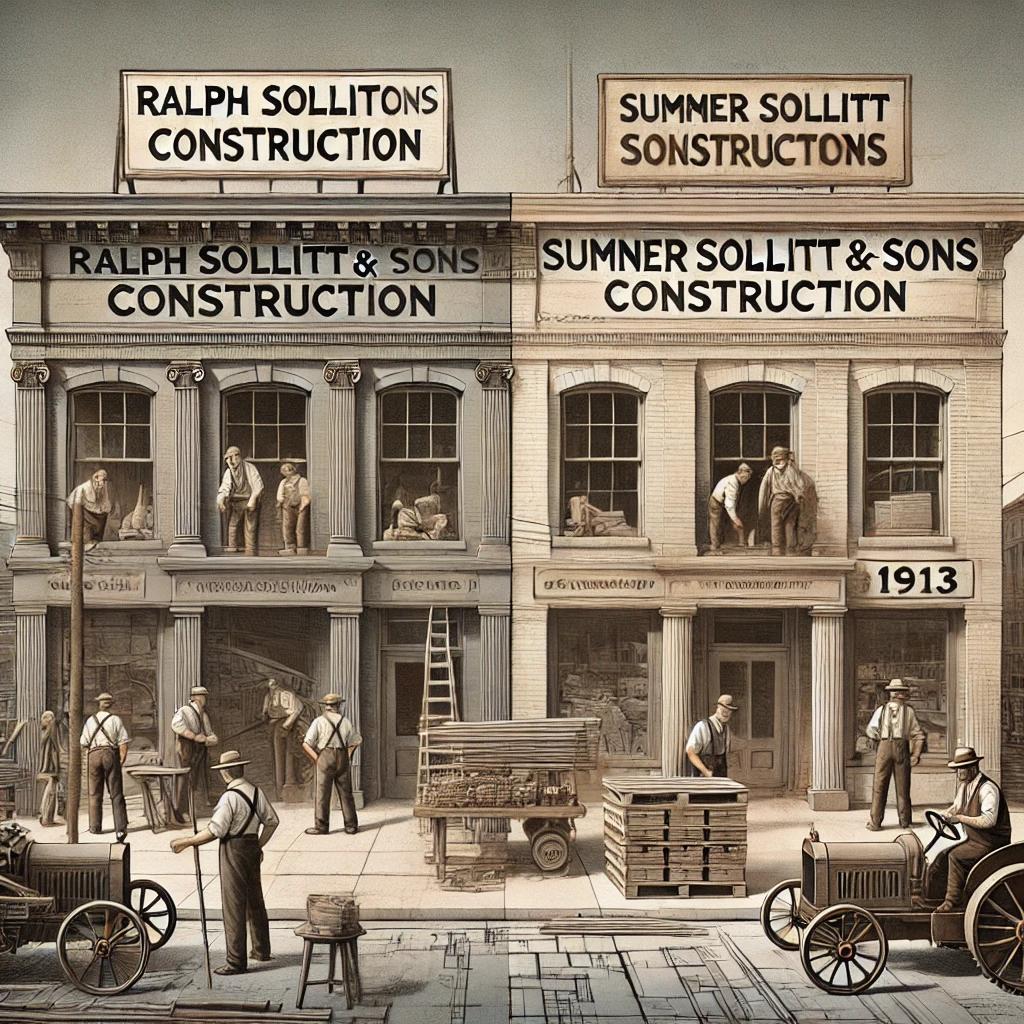
In 1913, Ralph and Sumner Sollitt decided to split Sollitt Brothers Construction into two distinct companies, marking a pivotal moment in the family’s legacy. The division allowed the brothers to ensure sustained growth while training the next generation of leaders, establishing two influential construction companies that became renowned nationwide.
The Decision to Split

Ralph and Sumner believed splitting the company was the best way to:

  • Diversify their operations and take on more projects across the country.
  • Develop specialized teams to meet evolving construction demands.
  • Focus on mentoring their sons, ensuring a seamless transition of leadership.

The split led to the creation of:

  • Ralph Sollitt & Sons Construction Company
  • Sumner Sollitt & Sons Construction Company

Both companies flourished, gaining a reputation for excellence and innovation in construction.

Engineering Education: Investing in the Future

All three Sollitt brothers sent their eldest children to engineering schools, instilling in them the knowledge and skills required to continue the family’s construction legacy. This focus on education set the foundation for their companies to thrive in the rapidly modernizing construction industry.

Legacy of the Split

By dividing the business, the Sollitt brothers demonstrated their foresight and commitment to sustainable growth. Both companies played pivotal roles in shaping early 20th-century American architecture and infrastructure, leaving an enduring legacy.

Brief Summary

In 1913, Ralph and Sumner Sollitt split Sollitt Brothers Construction into two companies—Ralph Sollitt & Sons and Sumner Sollitt & Sons. This move allowed the companies to expand their reach while training the next generation of leaders, cementing the Sollitt name as a cornerstone of American construction.

Links to Learn More

  1. University of Illinois Engineering School History
    • Explore the legacy of engineering education in the early 20th century.
    • Learn More Here
  2. Chicago Architecture Foundation
    • Discover Chicago’s construction history and the evolution of early 20th-century companies.
    • Visit Website
  3. National Museum of American History
    • Investigate innovations in construction and business during the industrial boom.
    • View Exhibit

Visiting Related Historical Sites

1. Chicago History Museum

  • What to See: Exhibits on Chicago’s architectural history and the families that shaped it.
  • Website: Chicago History Museum

2. Prairie Avenue Historic District

  • What to See: Historic mansions and buildings tied to Chicago’s industrial and architectural growth.

3. National Building Museum (Washington, DC)

  • What to See: Exhibits on the evolution of American construction companies, highlighting firms like Sollitt’s.
  • Website: National Building Museum
"Great leaders don’t set out to be leaders, they set out to make a difference. It’s never about the role—it’s always about the goal."
HISTORY

Explore More Of Our History

view our historic timeline