.jpg)
By 1875, the Sollitt family passed the reins to the next generation, transforming the company and expanding its influence. This pivotal period marked the emergence of Ralph, Thomas, and Sumner Sollitt as leaders, rebranding the family business as Sollitt Brothers Construction and leaving their mark on Chicago's rebuilt skyline.
After decades of resilience and innovation, the original Sollitt brothers handed their legacy to the next generation. Thomas' sons—Ralph, Thomas, and Sumner—brought fresh perspectives and energy to the company, ensuring its continued growth and relevance. Under their leadership, Sollitt Brothers Construction gained prominence for taking on ambitious projects that helped reshape Chicago.
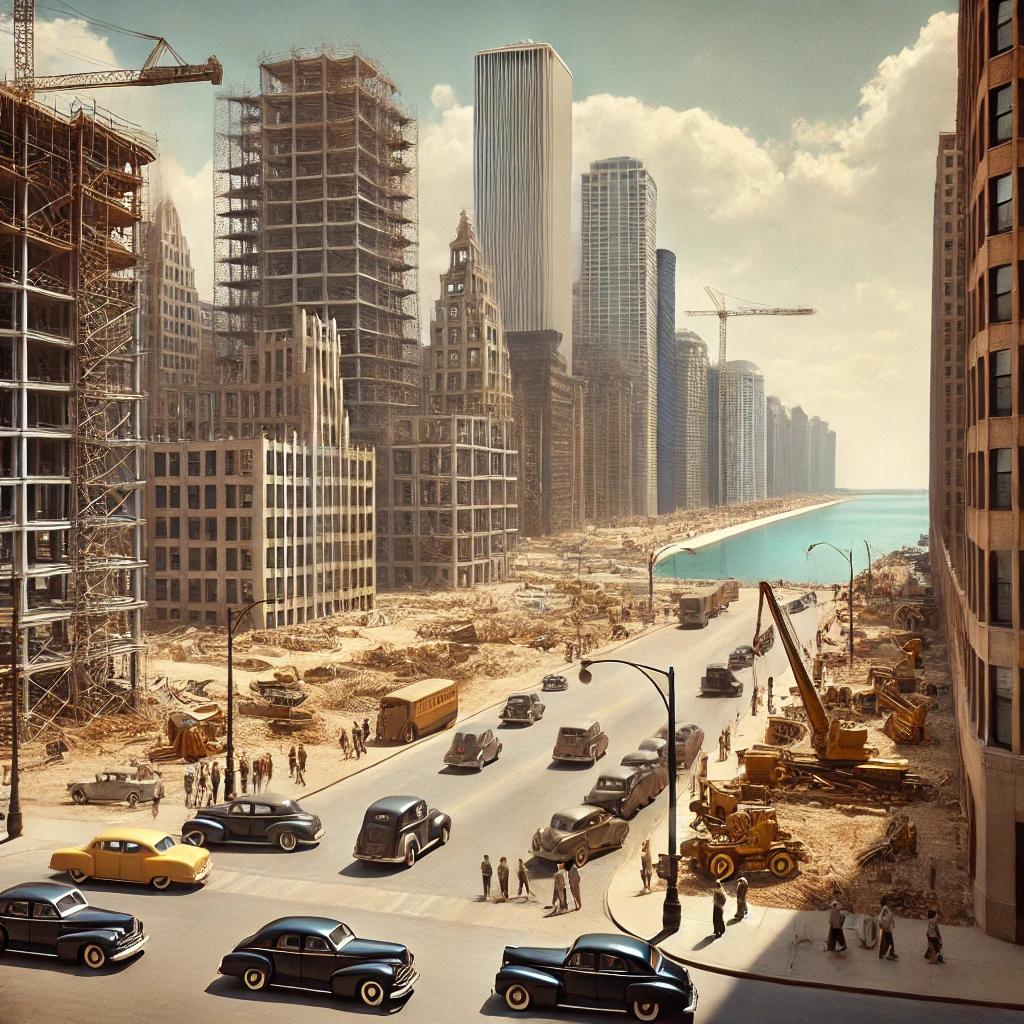
Twenty years after the Great Chicago Fire, Chicago was a city transformed. The 1893 World’s Columbian Exposition, though later, symbolized the city’s rebirth and optimism. Both Machinery Hall and the iconic Transportation Building were among the fair's most celebrated structures, reflecting the architectural innovation and craftsmanship of the era. The Sollitt Brothers played a crucial role in Chicago’s resurgence by contributing to the fair’s infrastructure and beyond.
This period was not just about reconstruction; it was about building a city that could stand the test of time. Sollitt Brothers Construction became synonymous with reliability and ingenuity, pioneering fireproof building techniques and taking on projects that defined Chicago’s new identity.
The Sollitt family’s contributions during this time cemented their reputation as trusted builders. Their focus on quality, innovation, and adaptability earned them long-term relationships with clients and positioned Sollitt Brothers Construction as a cornerstone of Chicago's history.
By 1875, the Sollitt family transitioned leadership to Ralph, Thomas, and Sumner Sollitt, who rebranded the company as Sollitt Brothers Construction. Their influence helped Chicago rebuild and thrive, with notable contributions to the iconic 1893 World’s Columbian Exposition, including the celebrated Machinery Hall and Transportation Building.
While many of the buildings from the World’s Fair no longer stand, there are still ways to explore its history and architectural significance. Here are some recommendations for experiencing this iconic era of Chicago’s development:
"A legacy endures when each generation builds upon the foundation of those who came before."